
As an Amazon Associate I earn from qualifying purchases. This post contains affiliate links.

Quick Answer: Coffee concentrate is coffee brewed two to four times stronger than normal, usually by cold brewing coarse grounds at a 1:4 to 1:5 coffee-to-water ratio for 12–24 hours. You dilute it with water or milk (start around 1:1) to get a regular-strength cup, hot or iced, in seconds. Homemade concentrate keeps about 1–2 weeks in the fridge. Per ounce it has roughly 25–100 mg of caffeine depending on the brand, so always check the label and dilute before drinking.
I’ll be upfront: my first homemade concentrate was not a precision job. I eyeballed the coffee, forgot the jar in the fridge for two days, strained it through a filter, and it still turned out good. That’s the nice thing about concentrate: it’s forgiving. Below I’ll cover what it actually is, how much caffeine you’re getting, how to make it at home (properly and the lazy way), and whether store-bought bottles are worth the money.
Quick picks
Want it ready-made: Starbucks Signature Black
The store-bought concentrate I’ve actually tried. Smooth and consistent, just add water and ice.
Want to make your own: Takeya Cold Brew Maker
1-quart pitcher with a built-in fine-mesh filter, so there’s no messy straining.
What Is Coffee Concentrate? Unpacking a Modern Coffee Essential
If you love coffee but crave ultimate convenience, coffee concentrate could be your new go-to. But what exactly is coffee concentrate? In short, it’s a potent, pre-brewed liquid coffee, designed to deliver bold flavor—just add water (or milk!) to enjoy coffee in seconds.
A Quick History of Coffee Concentrate
- Coffee concentrate isn’t new: liquid coffee essences have existed since the 19th century (Scotland’s Camp Coffee dates back to 1876).
- The boom in cold brew and craft coffee culture has reinvented concentrate as a premium, artisanal product.
- Today, coffee concentrate is crafted to preserve nuanced flavors, catering to both home baristas and busy professionals.
How Is Coffee Concentrate Made? Science Meets Simplicity
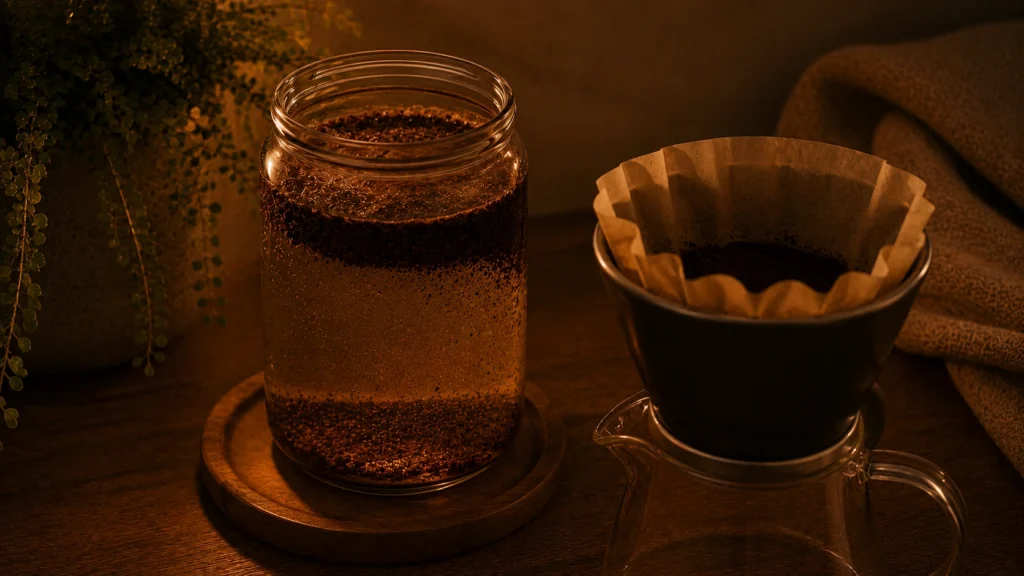
Coffee concentrate is typically made using a cold brewing process. This involves steeping coarsely ground coffee in cold or room-temperature water for 12–24 hours. The resulting liquid is highly concentrated—often two to four times stronger than regular brewed coffee.
- Commercial brands fine-tune this process for consistency, shelf stability, and exceptional taste.
- Some concentrate is hot-brewed and then rapidly cooled, but cold brewing is prized for smoother, less acidic results.
From Bean to Bottle: The Concentrate Creation Process
- Carefully sourced, high-quality beans are coarsely ground.
- Grounds are immersed in water at a specific ratio (often 1:4 to 1:8 coffee to water).
- The mixture steeps for 12–24 hours, extracting flavor and caffeine.
- The concentrate is filtered and sometimes pasteurized for longevity.
- Bottled in airtight, UV-resistant containers to preserve freshness.
Why Coffee Concentrate? The Benefits That Matter
Coffee concentrate provides:
- Speed: Make hot or iced coffee in seconds—just add water.
- Versatility: Use it in cocktails, desserts, smoothies, or straight over ice.
- Portability: Take it anywhere—from camping trips to your work desk.
- Customization: Adjust strength, sweetness, and milk to taste.
- Shelf Life: Homemade concentrate keeps about 1–2 weeks in the fridge.
Coffee Concentrate vs. Instant Coffee: Not the Same!
While both deliver quick coffee, there’s a big difference:
| Coffee Concentrate | Instant Coffee | |
|---|---|---|
| Flavor | Rich, full-bodied, true to the bean | Often flat, bitter, lacks depth |
| Brewing | Steeped, then diluted | Freeze-dried or spray-dried |
| Versatility | Can be used in recipes, cocktails | Mostly for drinking |
| Shelf-Life | Weeks refrigerated | Months to years, room temp |
| Caffeine | Higher per ounce | Lower per serving |
The Caffeine Science of Coffee Concentrate
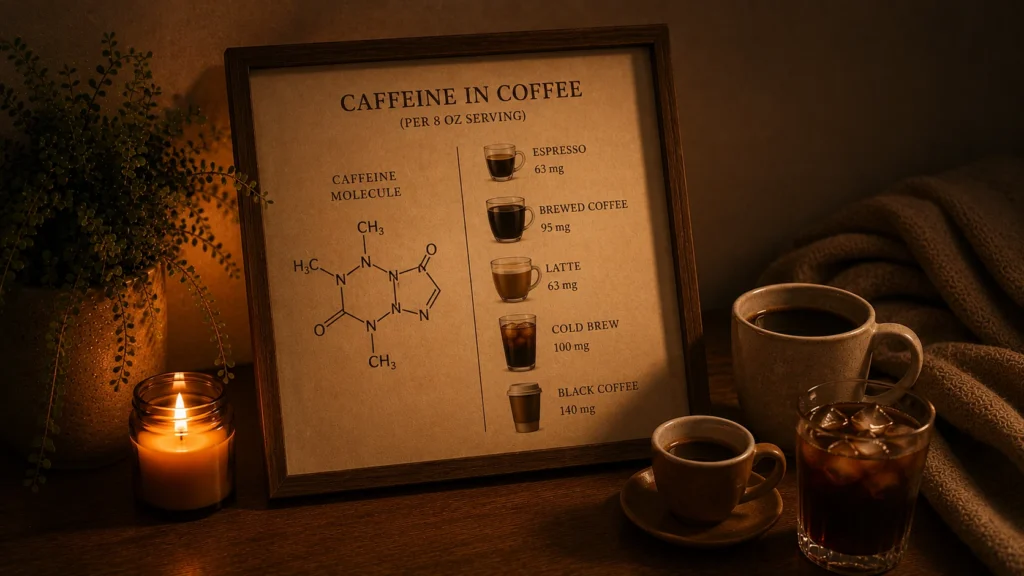
Coffee concentrate is a potent dose of caffeine, but how does it stack up scientifically?
- Caffeine Content: Concentrate is much stronger per ounce—store-bought concentrates range from about 25 mg to 100 mg of caffeine per ounce, versus roughly 12 mg per ounce in regular drip coffee (about 95 mg in an 8 oz cup). See our caffeine-per-cup guide for how other drinks compare.
- Dilution Control: When you add water or milk, you decide the final caffeine dose.
- Extraction Efficiency: Cold water actually extracts caffeine more slowly than hot water. Concentrate is stronger simply because it uses much more coffee per cup of water.
How Caffeine Works in the Body:
- Caffeine blocks adenosine receptors, keeping you awake and alert.
- Peak effects occur 30–60 minutes after consumption.
- Half-life (the time it takes your body to eliminate half the caffeine) is 4–6 hours.
Coffee Concentrate and Sleep
Because concentrate packs more caffeine into a small pour, it is easy to drink more than you think, especially if you eyeball the ratio. Caffeine has a half-life of roughly 4–6 hours, so a late-afternoon iced coffee can still affect your sleep at bedtime. We break down the timing in detail in how caffeine affects sleep.
How to Use Coffee Concentrate: Practical Tips for Every Lifestyle
At Home
- Start with 1 part concentrate to 1–2 parts hot water for a classic cup, then adjust to taste.
- Pour concentrate over ice, then add cold water or milk for iced coffee.
- Add to smoothies, pancakes, or dessert recipes for a caffeine boost.
My favorite way to drink it: summer morning, a tall glass with ice and milk, a straw, and somewhere with a view (a terrace or a porch). If the weather’s right, it beats any hot coffee.
On the Go
- Pre-mix in your travel mug for instant coffee at work or on road trips.
- Store in a mini-bottle for camping, backpacking, or airline travel (check liquid limits).
For Entertaining
- Batch cocktails: try espresso martinis with coffee concentrate (more ideas in our coffee cocktail guide).
- Serve coffee spritzers with sparkling water and citrus slices.
- Drizzle concentrate over ice cream for quick affogatos.
Barista-Level “Hacks”
- Use plant-based milks or sweeteners for creative lattes. Our latte at home guide covers milk ratios that work with concentrate too.
- Blend with protein shakes for a workout-friendly caffeine hit.
- Experiment with dilution ratios to control flavor intensity.
Myths vs. Facts About Coffee Concentrate
Myth 1: Coffee Concentrate Is Just “Strong Coffee”
Fact:
True coffee concentrate is specifically brewed to maximize extraction, balance, and shelf life. It’s not just leftover or over-brewed drip coffee.
Myth 2: It Tastes Stale or Bitter
Fact:
High-quality concentrate—especially cold-brewed—has smooth, sweet, complex flavors. Poor taste often signals low-quality beans or improper storage.
Myth 3: All Coffee Concentrates Have the Same Caffeine
Fact:
Caffeine varies by bean type, brew ratio, steeping time, and dilution. Always check product labels and control your mix.
Myth 4: You Can’t Make Specialty Coffee Drinks with Concentrate
Fact:
Many cafes batch cold brew concentrate for iced lattes, mochas and nitro drinks. It’s versatile for both classic and creative recipes.
How to Make Coffee Concentrate at Home: Step-by-Step
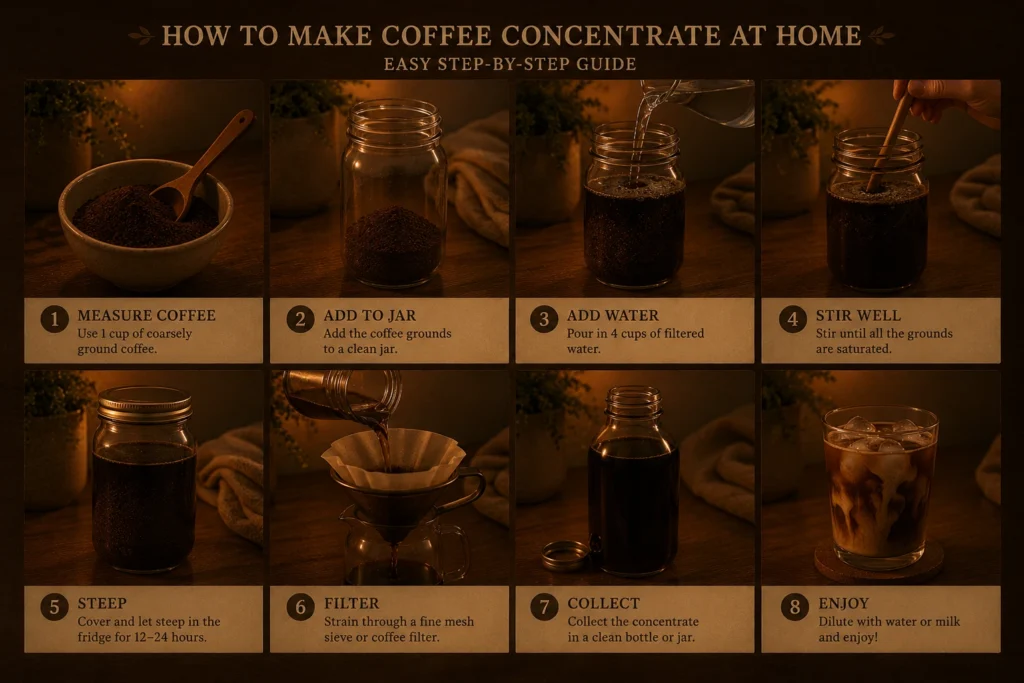
You’ll Need:
- Fresh, coarsely ground coffee beans
- Cold, filtered water (here’s why water quality matters)
- A large jar or French press
- Fine mesh strainer or cheesecloth
Method:
- Combine: Use a 1:5 ratio—1 cup coffee grounds to 5 cups water.
- Steep: Mix in a jar, cover, and let steep 12–24 hours at room temp or in fridge.
- Strain: Filter through cheesecloth or a fine mesh. A paper filter as a second pass gives a cleaner, less silty concentrate.
- Store: Refrigerate in airtight container up to 2 weeks.
Serving:
Start at 1:1 with water or milk and go up to 1:2 if it tastes too strong.
Less straining? Use a pitcher with a built-in filter.
I strained my batch through a regular coffee filter, which works but is slow and a bit messy. The Takeya 1-quart cold brew maker has a fine-mesh filter inside an airtight pitcher, so you steep, pull out the filter, and store the concentrate in the same pitcher.
My Lazy Batch (and What It Taught Me)
My own batch was closer to 1:9 coffee to water, and I didn’t weigh anything. I just scooped by eye. Then I left it steeping in the fridge for about 48 hours, mostly because I forgot about it. I strained it through a regular coffee filter, topped it up with plain water (no milk), and honestly, it was good.
Two takeaways. First, 1:9 is on the weak side for a true concentrate. It’s closer to ready-to-drink cold brew strength, which is why a splash of water was enough. If you want a real concentrate you can stretch into several cups, stick with 1:4 to 1:5. Second, cold brew is very forgiving on time. Most guides say 12–24 hours, and going longer can push it toward bitter, but my two-day batch survived just fine.
Flavor Boosts & Customizations
- Add spices (cinnamon, cardamom) during steeping
- Try different roast profiles—light roast for floral, dark for chocolate notes
- Sweeten your concentrate before storing for easy iced coffees
Choosing the Best Coffee Concentrate: What to Look For
- Ingredients: 100% coffee, water, and perhaps minimal natural flavorings—no preservatives or additives.
- Bean origin: Single-origin or specialty-grade beans yield better flavor.
- Cold brew vs. hot brew: Cold brew is smoother, while hot-brewed concentrate can be bolder.
- Packaging: UV-protected glass bottles preserve flavor best.
- Caffeine info: Look for clear caffeine per ounce labeling.
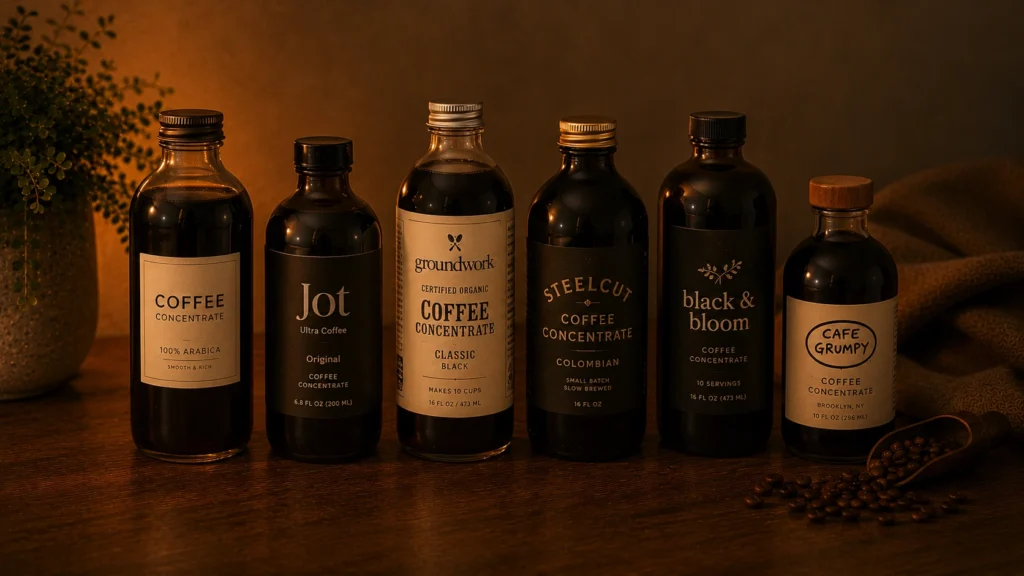
I’ve tried store-bought concentrate from Starbucks, and I have nothing bad to say about it. The taste is clean and consistent, and it’s clearly something you can’t quite copy at home. But for me it’s just too expensive for something I can make for a fraction of the price. The flavor is also different: more “commercial.” That’s not automatically better. It’s like a homemade burger vs. a fast-food one: they’re two different tastes, not a good one and a bad one. If convenience matters more than cost, a bottle is fine. If you drink it daily, homemade wins.
Starbucks Cold Brew Concentrate, Signature Black
The one I tried: smooth, medium-bodied, and consistent every pour. Just mix it with water and ice. It comes in multi-bottle packs, so it only makes sense if you drink iced coffee often.
Storing Coffee Concentrate: Shelf Life & Freshness
- Keep refrigerated after opening.
- Homemade: use within 1–2 weeks. Store-bought: follow the “use within” date on the label after opening. For why temperature matters, see how storage temperature changes coffee flavor.
- If it smells sour or develops sediment, discard.
- Freeze in ice cube trays for extended storage and cold coffee on demand.
Creative Coffee Concentrate Recipes
Iced Vanilla Latte
- 2 oz coffee concentrate
- 4 oz milk of choice
- 1 tsp vanilla syrup (a sugar-free vanilla syrup works great)
- Ice
Mix all ingredients. Serve over ice. Optional: top with whipped cream.
Coffee Tonic
- 1 oz coffee concentrate
- 4 oz tonic water
- Citrus wedge
Pour over ice, garnish with citrus.
Protein Power Shake
- 2 oz coffee concentrate
- 1 scoop protein powder
- 6 oz almond milk
- 1 banana
Blend and enjoy.
Affogato
- 1 scoop vanilla ice cream
- 1 oz coffee concentrate (warmed)
Pour concentrate over ice cream for a decadent dessert
My Go-To: Baileys & Vodka Coffee (a White Russian Twist)
- 1.5 oz coffee concentrate
- 1 oz Baileys (or another coffee/cream liqueur)
- 0.5 oz vodka
- Ice
Stir everything over ice. It’s my riff on a White Russian: the concentrate replaces the coffee liqueur, and Baileys brings the creaminess. The one rule is don’t overdo the vodka. Keep it at a splash and the drink stays smooth instead of harsh. For more ideas, check our coffee cocktail recipes. 21+ only, and drink responsibly.
Coffee Concentrate FAQ
In moderation, coffee concentrate is safe for most healthy adults. Watch caffeine intake and avoid excess sugar in recipes.
It’s very strong; dilute with water or milk unless you want an intense (and jittery) caffeine jolt.
Espresso is brewed under pressure and intended for immediate consumption. Concentrate is cold or hot-brewed and stored for later dilution.
Yes, just be mindful of total caffeine intake and avoid consumption late in the day to prevent sleep disruptions.
Yes—use high-quality decaf beans and follow the same method as regular concentrate.
Conclusion: Should You Try Coffee Concentrate?
If you drink iced coffee most days, travel a lot, or just hate waiting for a pot to brew, concentrate is worth trying. My advice: make a small batch at home first. Even my eyeballed, forgotten-in-the-fridge version came out good. Dial in your dilution ratio, and only then decide whether a store-bought bottle is worth paying for. Just remember it’s stronger than it looks, so measure your pour.
