
As an Amazon Associate I earn from qualifying purchases. This post contains affiliate links.
Introduction: Paper Filters and the Cup You Love
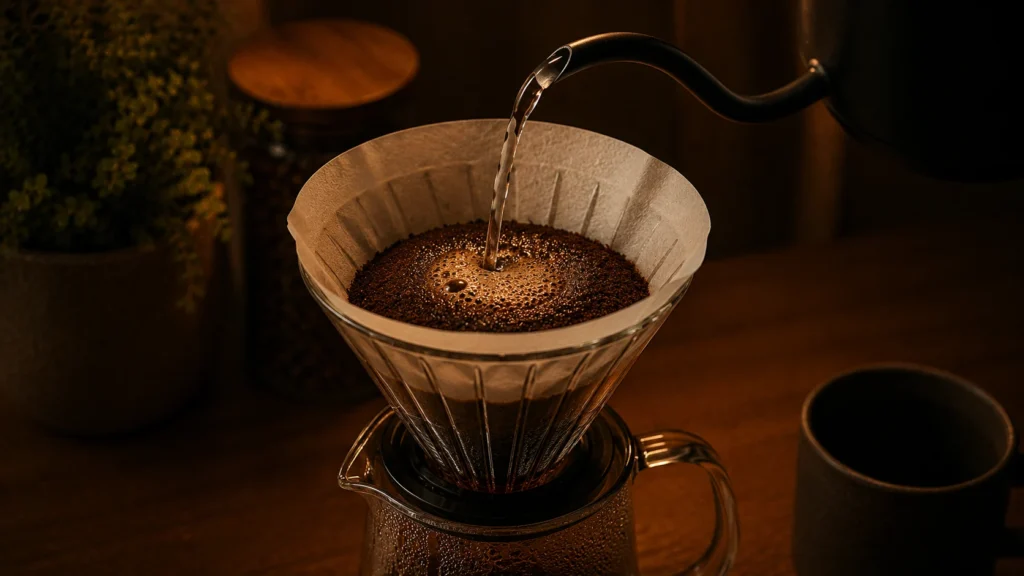
Coffee enthusiasts often debate pour-over methods, but one topic unites curious minds: Why do paper filters reduce coffee oils, and does it matter for your flavor, health, or caffeine buzz? Paper filters aren’t just a brewing accessory-they’re a scientific tool that shapes your daily cup in surprising ways.
In this definitive guide, we’ll dive into:
– The chemistry of coffee oils (“cafestol” and “kahweol”)
– How paper filters actually work
– What oil reduction means for flavor and body
– The health science behind filtered vs. unfiltered coffee
– Impacts on caffeine and sleep
– Debunked myths and practical brewing tips
– Lifestyle choices for coffee lovers
By the end, you’ll have an expert’s view on how paper filters shape your coffee experience and health.
Understanding Coffee Oils: Nature’s Complex Brew
What Are Coffee Oils?
Coffee oils are natural compounds present in coffee beans. When you grind and brew coffee, oils-especially the diterpenes cafestol and kahweol-are released into your cup. These compounds:
– Influence coffee’s mouthfeel, giving it richness and body
– Carry delicate aromatics, enhancing flavor complexity
– Affect cholesterol metabolism in the body
Where Do Coffee Oils Come From?
Coffee beans contain about 10-15% oil by volume. These oils are mostly trapped inside the bean until brewing, when hot water extracts them:
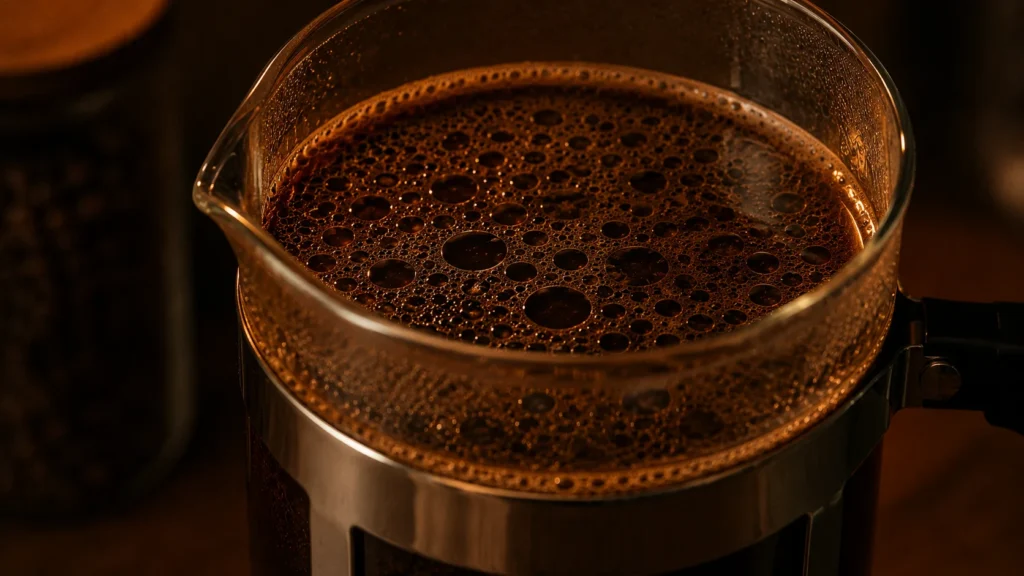
– Espresso and French press = more oils
– Paper-filtered drip = fewer oils
– Metal-mesh filter = moderate oils
Different brewing methods, roast profiles, and grind sizes impact how much oil ends up in your cup.
How Paper Filters Work: The Science of Filtration
Coffee Filter Materials: Paper vs Metal vs Cloth
– Paper: Fine, dense cellulose fibers create a barrier that traps micro-grounds and oils.
– Metal: Mesh allows most oils and fine particles through.
– Cloth: Sits between paper and metal, allowing some oils but trapping larger particles.
Microscopic Barrier: Why Paper Filters Trap Oils
Paper filters are manufactured with tiny pores, typically 20 microns or less. Coffee oils, especially diterpenes, bind to microscopic solids or move as minuscule droplets suspended in the brew. You can learn more about paper filters here.
– These droplets are larger than the pores in paper filters
– Paper captures them, resulting in a cleaner, less oily cup
– Metal and cloth filters have larger pores, letting more oils through
What Gets Removed?
The primary compounds paper filters trap are:
– Cafestol and kahweol (linked to cholesterol modulation)
– Sediment and micro-grounds (affecting texture)
– Tiny aromatic oils (subtly changing flavor)
What Stays in Your Cup?
Despite filtration, many flavor and aroma compounds pass through:
– Caffeine (water-soluble, passes through all filters)
– Most acids and sugars
– Volatile aromatics (though some cling to oils)
Coffee Oils and Flavor: Does Filtering Ruin the Taste?
Body and Mouthfeel
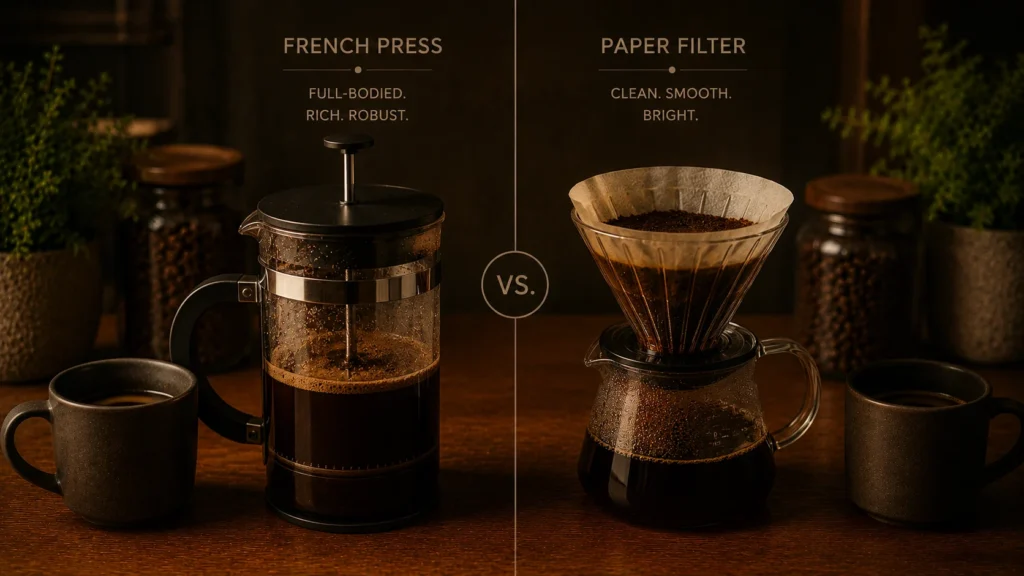
Coffee oils give unfiltered brews a creamy, full-bodied texture. Many describe French press or percolator coffee as richer due to this.
Paper-filtered coffee often feels “cleaner” or “crisper” with:
– Less body and weight
– More pronounced acidity and delicate flavors
Aromatics and Nuance
While some aromatic compounds are oil-bound, paper filtering highlights:
– Bright, floral, or fruity notes
– More clarity between distinct flavors
The trade-off: You might lose some heavy, chocolatey undertones but gain sparkle and definition.
Practical Taste Test
To understand for yourself:
1. Brew the same coffee as a French press (no filter) and as a V60 pour-over (paper filter).
2. Compare mouthfeel, aftertaste, and flavor clarity.
3. Notice oil sheen on the French press surface vs. the paper-filtered cup.
Health Impacts: What Science Really Says About Filtered Coffee
Cafestol, Kahweol, and Cholesterol
Numerous studies link high consumption of unfiltered coffee-rich in cafestol and kahweol-to elevated LDL (“bad cholesterol”). Here’s the breakdown:
– French press & boiled coffee: Highest diterpenes, associated with cholesterol increase
– Paper-filtered coffee: Removes ~90-95% of these compounds, neutral impact on cholesterol
– Espresso: Moderate diterpenes; smaller servings mean lower total intake
How Significant Are the Health Effects?
– For most healthy adults, moderate unfiltered coffee is safe
– People with high cholesterol or cardiovascular risk benefit from paper filtration
– The American Heart Association recommends filtered coffee for those monitoring cholesterol
Other Health Considerations
– Filtering reduces minute particles, leading to fewer gastrointestinal irritants
– Paper filters eliminate sediment, making the drink easier on digestion for some
Caffeine Science: Does Paper Filtering Reduce Caffeine?
Caffeine is water-soluble and passes freely through all filters, including paper. Your caffeine intake does not depend on the filter, but on:
– Coffee-to-water ratio
– Brew time
– Grind size and bean type
You can learn more about what affects caffeine content and how much caffeine is in your cup here.
Coffee and Sleep Science: Filtered vs. Unfiltered
Sleep disruption is mainly caused by:
– Caffeine timing (consumed within 6-9 hours of bedtime)
– Individual sensitivity
Filtered vs. unfiltered coffee has no direct influence on sleep, but:
– Some people find filtered coffee gentler on the stomach, reducing reflux that might disturb sleep
Paper Filters: Practical Pros and Cons
Benefits of Paper Filters
- Health: Reduces diterpenes linked to cholesterol elevation
- Flavor: Amplifies clarity and acidity, ideal for light roasts and single origins
- Cleanliness: Captures sediment, resulting in a grit-free cup
- Consistency: Less likely to clog with fine particles
Drawbacks of Paper Filters
- Flavor: Loss of some body and complexity from coffee oils
- Waste: Single-use; not as eco-friendly as metal or cloth (though compostable options exist)
- Supply: Requires regular purchasing; risk of running out
Best Use Cases
- Health-conscious drinkers
- Coffee tasters seeking maximum clarity
- Pour-over, drip, or Aeropress fans
Brewing Tips: Getting the Most Out of Paper-Filtered Coffee
Choosing the Right Filter
- Use unbleached filters for eco-friendliness (though some taste a faint “papery” note)
- Rinse your filter with hot water before brewing to remove paper flavor and preheat your gear
Brewing Technique
- Use freshly ground coffee, medium grind for best extraction
- Keep water temperature between 195–205°F (90–96°C)
- Bloom grounds with a small pour, then continue in slow, controlled circles
Flavor Maximization
- Try lightly roasted beans to highlight subtle origin flavors
- Experiment with ratios (start at 16:1 water-to-coffee by weight)
- Taste side-by-side with metal filter for education
Myths vs. Facts: The Truth About Paper Filters and Coffee Oils
Myth 1: Paper filters remove all the flavor.
Fact: Paper filters capture some oils, but most aromatic and flavor compounds pass through. You get brighter, more distinct flavors.
Myth 2: Filtered coffee has less caffeine.
Fact: Caffeine is water-soluble, not oil-bound. Filtered and unfiltered coffees have similar caffeine, given identical brewing parameters.
Myth 3: Paper filters are bad for the environment.
Fact: Many filters are compostable and made from sustainable sources. Metal or cloth filters are better for zero-waste, but paper is catching up in eco-friendliness.
Myth 4: Only health nuts need to worry about coffee oils.
Fact: Science links unfiltered coffee with increased cholesterol. If you have cholesterol concerns, paper-filtered brews are the best choice.
Lifestyle Examples: Paper-Filtered Coffee in Daily Routines
The Health-Conscious Executive
Maria, a busy executive, opts for a Chemex with paper filters every morning. She loves the clean taste and peace of mind, knowing her coffee habit isn’t impacting her cholesterol.
The Flavor Explorer
Alex, a specialty coffee enthusiast, uses paper filters to appreciate single-origin beans. Brewing with a V60, he experiments with beans from Ethiopia and Colombia, savoring each origin’s distinct fruit or floral notes.
The Home Barista
Priya enjoys crafting lattes at home. She alternates between paper-filtered pour-overs for clarity and French press for weekend indulgence, illustrating how filter choice offers flexibility and exploration.

Paper vs. Metal vs. Cloth: Which Filter Should You Choose?
Quick Comparison Table
| Attribute | Paper Filter | Metal Filter | Cloth Filter |
|---|---|---|---|
| Oil Removal | Excellent (~90%) | Low (~15-25%) | Moderate (~60%) |
| Sediment Removal | Excellent | Poor | Good |
| Flavor Clarity | High | Moderate | Moderate-High |
| Body/Mouthfeel | Light | Full | Medium |
| Environmental Impact | Compostable | Reusable | Reusable |
| Maintenance | Easy | Needs cleaning | Needs cleaning (can develop odor) |
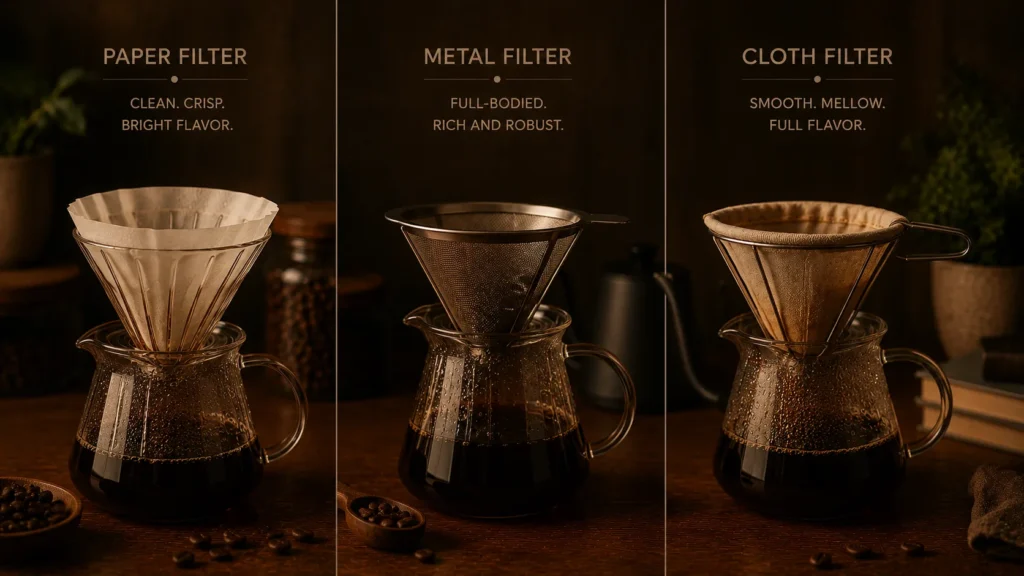
Bottom Line: Match Filter to Your Preference
- Paper: Best for health and bright, clean cups
- Metal: Best for full-bodied, robust coffee
- Cloth: Balanced option, but requires maintenance
Frequently Asked Questions
No, paper filters remove ~90-95% of coffee oils, especially larger oil droplets and diterpenes. Some trace oils and flavor compounds remain for aroma and taste.
Yes. Multiple studies show that using paper filters significantly reduces diterpenes (cafestol, kahweol) linked to higher cholesterol.
No. Caffeine is water-soluble and passes through paper filters unchanged. Caffeine levels are determined by the amount of coffee and brew time, not the filter.
Both are safe. Unbleached filters may impart a mild paper flavor unless rinsed. White filters are typically oxygen-bleached, not chlorine-bleached, for food safety.
Most modern paper filters are fully compostable (check packaging). Used coffee grounds and filters make excellent compost.
Conclusion: The Power of a Simple Filter
Although coffee seems simple, every detail-especially filter choice—shapes the brew in your cup and its effect on your body. Paper filters offer clarity, health benefits, and a modern, clean taste experience. Whether you’re chasing pure origin flavors, watching your cholesterol, or simply craving a smooth, grit-free cup, the humble paper filter might just be your best barista move.
