
Coffee feels simple. You pour it, drink it, feel more awake.
But caffeine doesn’t work in a straight line. A small espresso can feel stronger than a large latte, and a mild-tasting coffee can quietly push you over your daily limit.
This guide breaks everything down clearly. Real numbers. Real explanations. No fear tactics. Just enough detail to help you actually understand what’s in your cup.
Coffeeonix will help you figure it out!
What Caffeine in Coffee Really Means
Before looking at numbers, one important thing needs to be clear.
Caffeine is not about how strong coffee tastes.
It’s about how much caffeine is extracted and how much liquid you drink.
In simple terms:
- Caffeine extracts quickly.
- More water usually means more total caffeine.
- Roast level affects flavor more than caffeine content.
For example, espresso tastes intense but comes in a very small volume. Drip coffee tastes smoother, but you drink much more of it – and often end up with more caffeine overall.
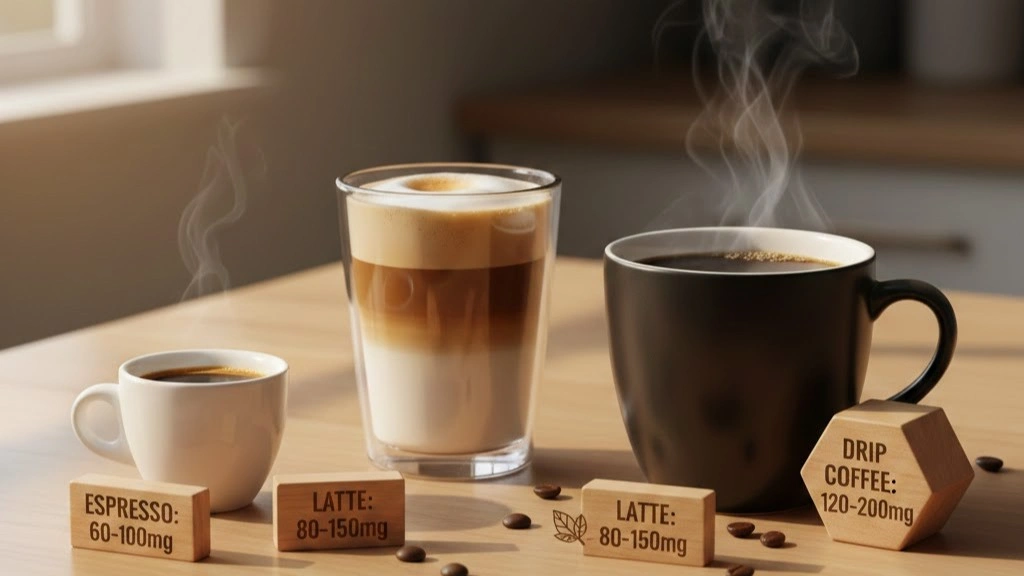
Average Caffeine Content by Coffee Type
This is what most people are looking for. Let’s put clear numbers on the table. Reliable source.
Caffeine per Cup (Average Values)
| Coffee Drink | Serving Size | Caffeine (mg) |
|---|---|---|
| Espresso | 30 ml (1 oz) | 60–70 mg |
| Double Espresso | 60 ml | 120–140 mg |
| Americano | 240 ml | 90–120 mg |
| Latte | 350 ml | 80–120 mg |
| Cappuccino | 180 ml | 65–90 mg |
| Drip Coffee | 240 ml | 95–165 mg |
| Cold Brew | 240 ml | 150–200 mg |
These are averages. Bean origin, grind size, brew time, and ratio can shift the numbers noticeably.
Espresso vs Latte vs Cappuccino – What’s the Real Difference?
This comparison confuses people more than it should.
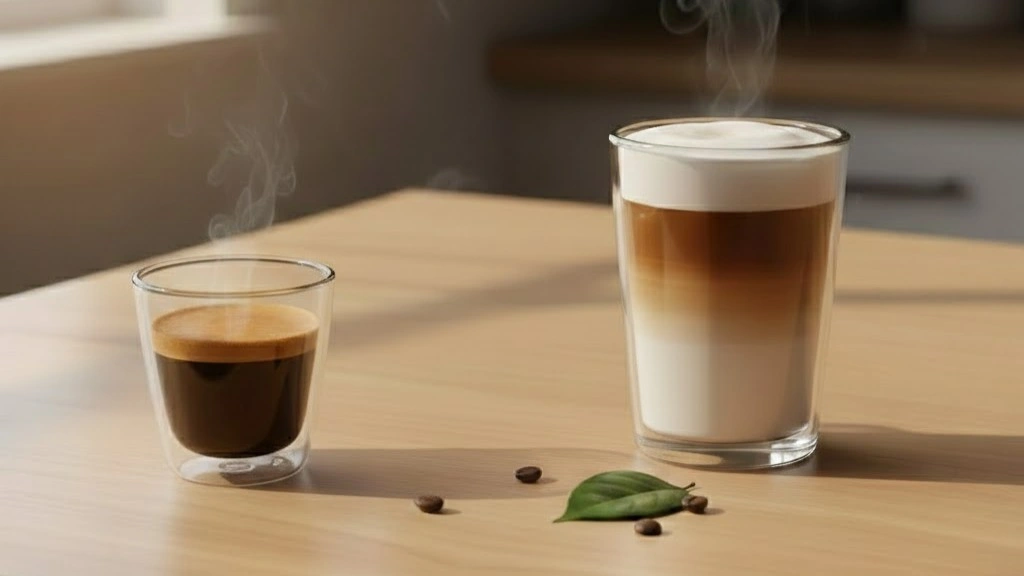
The key fact is simple: latte and cappuccino usually contain the same amount of caffeine as espresso. The difference is milk and volume.
Espresso
- Very small volume
- High caffeine concentration
- Fast, sharp effect
Latte
- Same espresso shot
- Large amount of milk
- Slower drinking, smoother effect
Cappuccino
- Same espresso base
- Less milk than a latte
- Slightly stronger perceived impact
If you remember one thing:
milk changes the experience, not the caffeine amount.
Does Dark Roast Have More Caffeine?
This is one of the most persistent coffee myths.
Dark roast tastes stronger. ( Myth )
But light roast often contains slightly more caffeine by weight.
Why?
- Dark roasting breaks down a small amount of caffeine.
- Light roast beans are denser.
- Measuring by scoops instead of weight skews perception.
From personal experience, light roasts feel brighter and more stimulating, while dark roasts feel heavier and richer – but not necessarily more energizing.
Flavor intensity is not caffeine intensity.
Caffeine by Brewing Method (Not by Drink Name)
Focusing only on drink names hides what really matters: brewing method.
Drip / Pour-Over
- Longer contact time
- Medium to high caffeine
- Most common daily source
French Press
- Full immersion
- High extraction
- Often stronger than drip
Cold Brew
- Very long extraction
- Extremely high caffeine
- Easy to overconsume
Espresso-Based Drinks
- Short extraction
- High concentration
- Lower total caffeine per serving
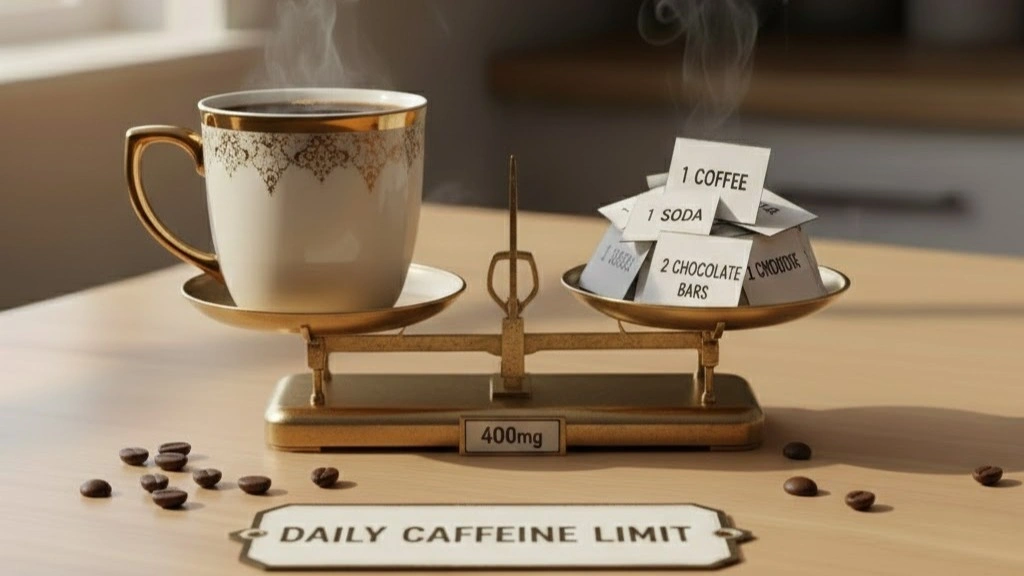
How Much Caffeine Is Too Much?
This is where many articles become vague. Let’s be clear.
For most healthy adults:
- Up to 400 mg per day is considered a safe upper limit.
That equals roughly:
- 4–5 espressos
- 3 medium drip coffees
- 2 strong cold brews
Signs you’re overdoing it:
- jittery hands
- racing thoughts
- anxiety
- poor sleep quality
Why the Same Coffee Feels Different on Different Days
Same beans. Same cup. Totally different effect.
Common reasons:
- poor sleep
- empty stomach
- dehydration
- stress levels
- reduced or increased tolerance
Caffeine stays in your system for hours.
Your body state changes how it reacts.
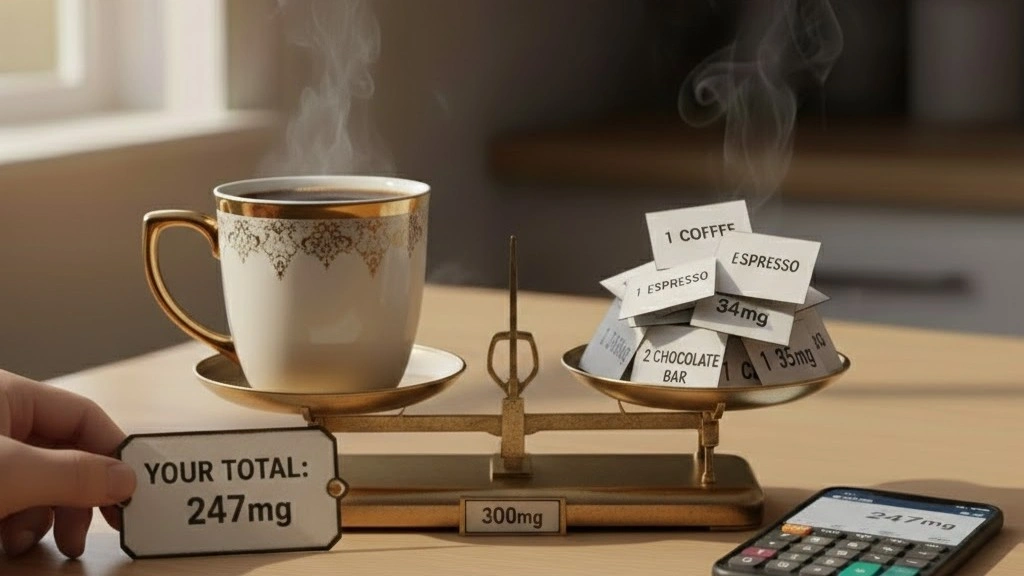
How to Calculate Your Daily Caffeine Intake
This is where people usually underestimate. ( Detailed information )
Step-by-Step
- List every caffeinated drink you consume.
- Assign an average caffeine value.
- Add them up.
- Compare to the 400 mg guideline.
Two lattes + one cold brew can quietly push you past the limit.
Milk, Ice, and Size Illusions
Large cups feel harmless. They aren’t.
- Milk softens bitterness, not caffeine.
- Ice increases volume perception.
- Large sizes encourage faster overconsumption.
A large iced latte can contain more caffeine than you expect – especially with multiple shots.
Caffeine Timeline in Your Body
Understanding timing helps avoid sleep issues.
What Happens After Drinking Coffee
- 15–30 min: caffeine enters bloodstream
- 1–2 hours: peak alertness
- 6–8 hours: still active in your system
Late afternoon coffee often explains poor sleep, even if you “don’t feel it”.
Quick FAQ (Snippet-Friendly)
Typically between 95 and 165 mg, depending on the brew method.
Per sip, yes. Per cup, usually no.
Yes, as long as total caffeine intake stays within reasonable limits.
Final Takeaway
Caffeine isn’t the problem.
Unawareness is.
Once you understand how caffeine actually works, coffee becomes a tool instead of a gamble. Energy, focus, comfort – all adjustable when you know what’s in your cup.
