

Coffee acidity is determined by the coffee’s origin, bean variety, processing method, roast level, and brewing variables. Factors such as altitude, fermentation, roast time, grind size, and water temperature influence how acids are preserved, extracted, or muted in the final cup. Let me explain in more detail.
Coffee acidity is one of those topics that sounds simple until you actually try to explain it. Some people say acidic coffee is “sour”. Others describe it as “bright”, “juicy”, or “lively”. Both can be true – and that’s where confusion starts.
Acidity in coffee isn’t a flaw by default. It’s a natural result of chemistry, farming, roasting, and brewing. I’ve tasted light roasts that felt fresh and exciting, and others that were painfully sour because something went wrong in extraction. Same beans, different outcome.
Let’s break down what really determines coffee acidity, without myths and marketing fluff.
What Does “Acidity” Mean in Coffee?
Before talking about what factors determine the acidity of coffee, we need clarity. Coffee acidity has two meanings that often get mixed up.
One is chemical acidity – measurable pH and the presence of organic acids.
The other is perceived acidity – how your tongue experiences the cup.
Perceived acidity is what people usually mean. It feels bright, crisp, sometimes fruity. Sourness, on the other hand, is harsh and unpleasant, and usually signals under-extraction.
If short:
acidity = freshness and structure
sourness = imbalance

Main Factors That Determine Coffee Acidity
Acidity doesn’t come from one source. It’s layered. Think of it like sound equalizers – change one slider, the whole profile shifts.
Coffee Bean Origin
Geography matters more than most people expect.
High-altitude regions slow down coffee cherry development. Slower growth = more complex acids. That’s why African coffees often taste bright and fruity.
Typical patterns look like this:
| Region | Acidity Profile |
|---|---|
| Ethiopia, Kenya | High, citrusy, floral |
| Central America | Medium, clean, balanced |
| Brazil, Indonesia | Low, soft, nutty |
This is where acidity starts – everything else only modifies it.
If you’d like to learn more about coffee beans, visit our Beans and Roasting category. You can also check out our article Best Coffee Beans in the World.
Coffee Variety and Processing Method
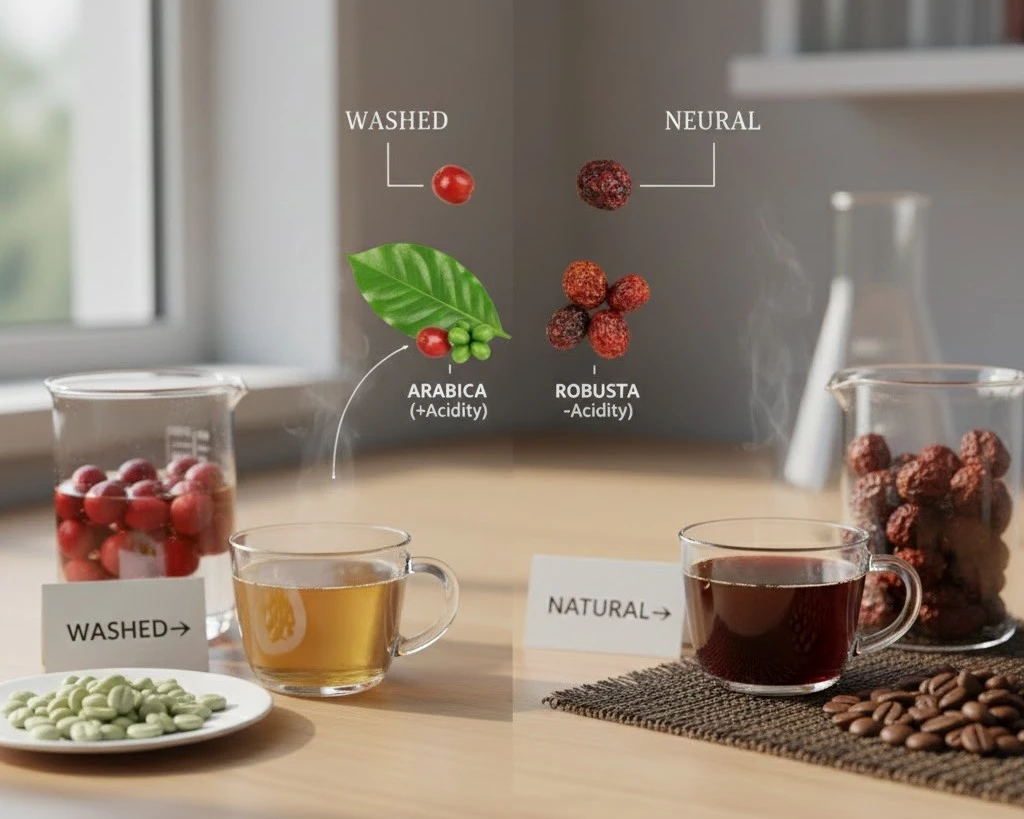
Arabica beans naturally contain more acids than Robusta. That alone already tilts the cup.
Then comes processing.
Washed (wet-processed) coffees keep acids clean and sharp. Natural (dry-processed) coffees feel rounder, sometimes wine-like, with softer acidity.
I’ve noticed this clearly when brewing the same origin with different processing – washed tastes brighter, natural feels heavier even if acidity is still there.
Roast Level
Roasting is where acidity either survives or dies.
Light roasts preserve acids like citric and malic. Medium roasts balance acidity with sweetness. Dark roasts break acids down, replacing brightness with bitterness and body.
Here’s the honest truth:
dark roast coffee isn’t “less acidic” chemically – it just tastes less acidic.
| Roast Level | Perceived Acidity |
|---|---|
| Light | High |
| Medium | Balanced |
| Dark | Low |
Brewing Variables That Change Acidity
Even perfect beans can taste awful if brewed wrong.
This is where many people blame the coffee instead of the method.
Grind Size and Extraction
Finer grind = faster acid extraction.
Too fine + short brew = sour cup.
Too coarse + long brew = flat, dull acidity.
Espresso exaggerates acidity. French press softens it. Pour-over sits somewhere in the middle.
I tested the same light roast with different grind sizes – the difference was night and day.
Water Quality and Temperature
Water is often ignored, but it controls everything.
Soft water highlights acidity. Hard water suppresses it. Minerals bind acids and change perception. I have an article about the importance of water quality.
Temperature matters too. Hotter water extracts acids faster. Cooler water slows everything down.
This is why cold brew usually tastes smoother, even though coffee itself is acidic.

Types of Acids Found in Coffee
Not all acids taste the same. Coffee contains dozens of them, but a few dominate. Proven by SCA
Citric acid gives citrus brightness.
Malic acid tastes like green apple.
Acetic acid feels sharp and vinegary.
Quinic acid increases in darker roasts and can feel harsh.
The balance between these acids defines whether acidity feels pleasant or aggressive.
How to Control Acidity in Your Cup
If acidity feels too sharp:
- choose medium or dark roast
- grind slightly coarser
- lower brew temperature
- try immersion methods
If acidity feels flat:
- go lighter roast
- grind finer
- increase brew temperature
- use pour-over or espresso
Coffee acidity isn’t good or bad. It’s adjustable.
FAQ
Not necessarily. Perceived acidity doesn’t always correlate with stomach irritation.
It usually tastes less acidic due to slower extraction, not lower pH.
Yes. Milk buffers acids and softens perception.
