

As an Amazon Associate I earn from qualifying purchases. This post contains affiliate links.
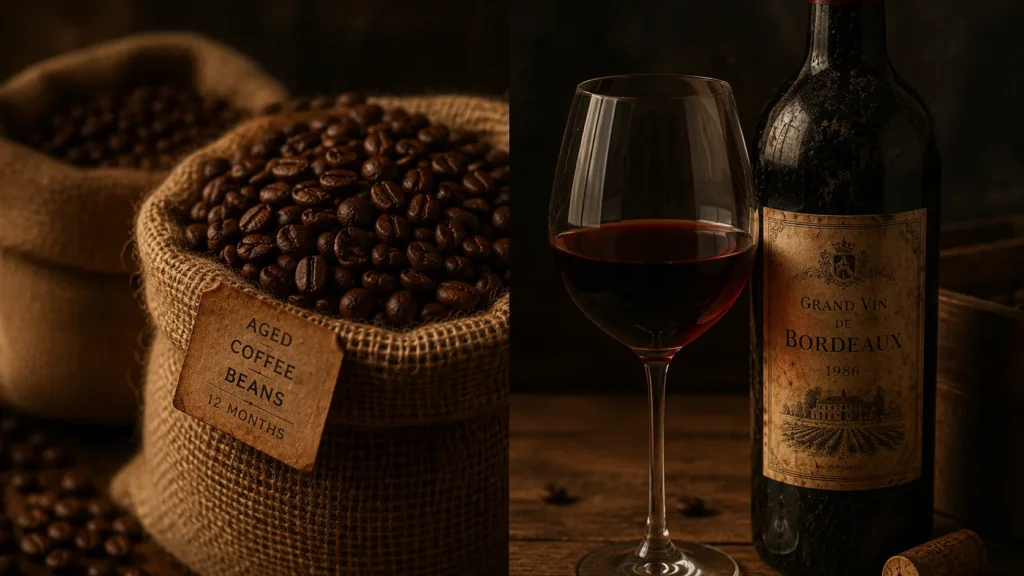
Coffee and wine both entice with their complex flavors, storied origins, and rituals of enjoyment. As coffee’s specialty scene grows, a fascinating question emerges: Can coffee beans age like wine? Could a green or roasted coffee develop richer, more nuanced flavors as the years go by, just like that prized Bordeaux or Barolo? Or is coffee’s magic all about freshness?
In this deep-dive guide, Coffeeonix explores the science behind coffee bean aging, busts myths, examines real-world practices, and delivers practical tips for curious enthusiasts and discerning connoisseurs.
Understanding Coffee Bean Aging: The Basics
Aging isn’t just about time. In coffee, it reflects a complex interplay of biochemistry, storage conditions, and human intention. To understand if beans can “age like wine,” let’s break it down:
- Wine Aging: Driven by controlled oxidation, tannin softening, and complex chemical transformations. Many fine wines appreciate with the right cellaring.
- Coffee Aging: Both green (unroasted) and roasted beans can age—but their flavors, chemistry, and quality change in very different ways.
Types of Coffee Aging
- Green Coffee Aging: Storing unroasted beans for months or years before roasting.
- Aged Coffee: Specialty lots intentionally aged (often in controlled environments) for signature flavor profiles.
- Roasted Coffee Aging: Letting roasted beans “rest” (for days or weeks) versus keeping them for months or more.
Caffeine Science: Does Aging Change Caffeine Levels?
Caffeine, a natural stimulant, is remarkably stable. It’s one of the hardiest compounds in coffee, surviving roasting heat and prolonged storage. Studies show:
- Caffeine Content: Remains largely unchanged during both green and roasted coffee aging.
- Flavor vs. Function: While aged beans may develop interesting flavors (or staling compounds), their caffeine content is consistent.
You won’t get a stronger or weaker buzz from aged coffee beans. The “kick” comes from the same caffeine, though the flavor journey may shift.
Sleep Science: Does Aged Coffee Affect Sleep Differently?
Many ask: Will coffee made from aged beans keep you up more (or less) than fresh coffee?
The Science Says:
- Caffeine’s Impact: Regardless of bean age, caffeine blocks adenosine (the “sleepy hormone”) in your brain, promoting alertness.
- Aging & Body Response: No evidence supports that aged coffee causes less sleep disruption. Your body processes caffeine the same way, whether from fresh or aged beans.
- Flavor Perception: Aged coffees might taste smoother or less acidic, fooling some into feeling the effects less—but the stimulant is unchanged.
Practical Tip: If you’re sensitive to caffeine, aged beans are not a workaround for late-night cups.
The Chemistry of Coffee Aging: Molecular Transformations
What actually happens as coffee ages? Let’s look at both green and roasted beans.
Green Coffee Aging
When green beans are stored after harvest:
- Moisture Loss: Beans gradually lose water content, changing cell structure and solubility.
- Enzymatic Changes: Residual enzymes may break down certain compounds, subtly shifting flavors.
- Volatile Loss: Aromatic compounds (especially delicate florals, fruits) can degrade.
- Development of “Aged” Flavors: Aged green beans can develop woody, spicy, or funky notes prized in some traditions (like aged Sumatra or Monsooned Malabar).
Risks:
- Poor storage (humidity, temperature swings, oxygen) can lead to mold, flat flavors, or irreversible staling.
Roasted Coffee Aging
Roasting triggers a cascade of chemical reactions (Maillard, caramelization). Post-roast:
- Degassing: Freshly roasted beans release CO₂ for several days.
- Flavor Development: A short “rest” (12–72h) can mellow bitterness and bring out complexity.
- Staling: Over weeks, oxidation and volatile loss create flat, cardboard or rancid notes.
Unlike wine, roasted coffee quickly loses vibrance.
Myths vs Facts: Does Coffee Really “Age Like Wine”?
Let’s bust the most common beliefs:
- Myth 1: Aging always improves coffee, like wine.
Fact: Most coffee degrades with age-especially after roasting. Only certain green coffees benefit from controlled aging. - Myth 2: Roasted coffee gets better with time.
Fact: Roasted beans lose aroma and flavor quickly. Peak flavor is usually within 2–21 days of roast. - Myth 3: Aged coffee is always stale.
Fact: Specialty aged coffees (Monsooned Malabar, aged Sumatras) are intentionally transformed and can be prized for unique notes. - Myth 4: Bean color or smell always reveals quality.
Fact: Some aged coffees smell musty or woody and look faded, but that isn’t always a flaw—sometimes it’s a signature of style.
How Specialty Coffee Approaches Aging
Certain coffee cultures have embraced the art of aging:
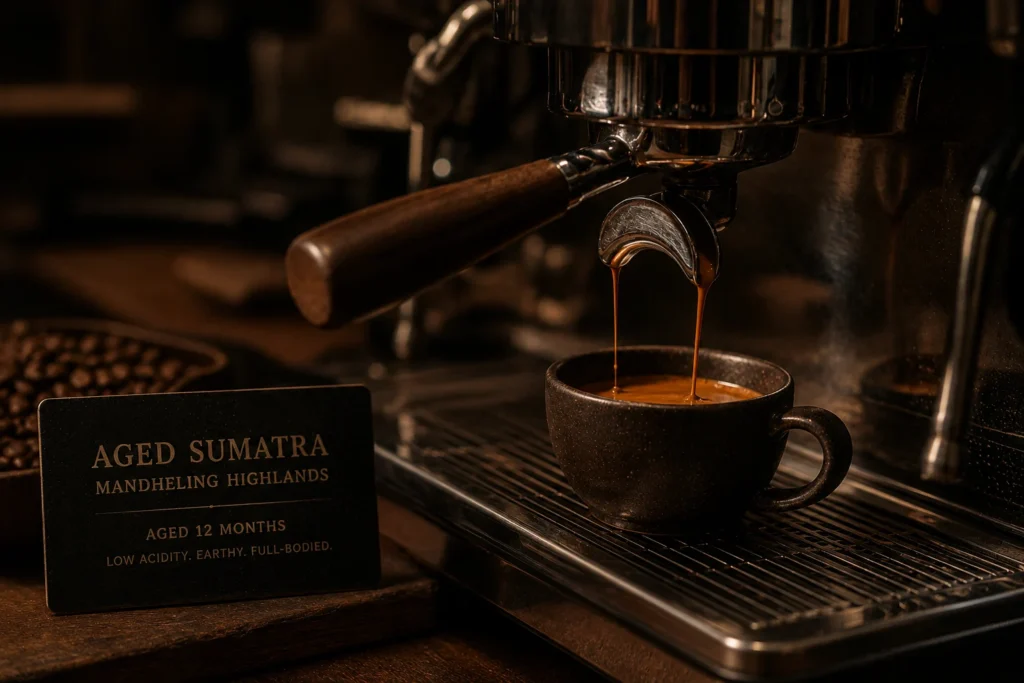
Aged Sumatran Coffee
- Process: Green beans aged for months to years in humid warehouses.
- Flavor: Heavy, earthy, spicy, low acidity. Sought after for espresso blends.
Monsooned Malabar (India)
- Process: Exposed to monsoon winds and moisture for weeks or months.
- Flavor: Swollen beans, mellowed acidity, unique musty-sweet notes.
Experimental Barrel-Aged Coffees
- Process: Green beans stored in whiskey, rum, or wine barrels.
- Flavor: Absorbs spirit or oak notes—growing in popularity among specialty roasters.
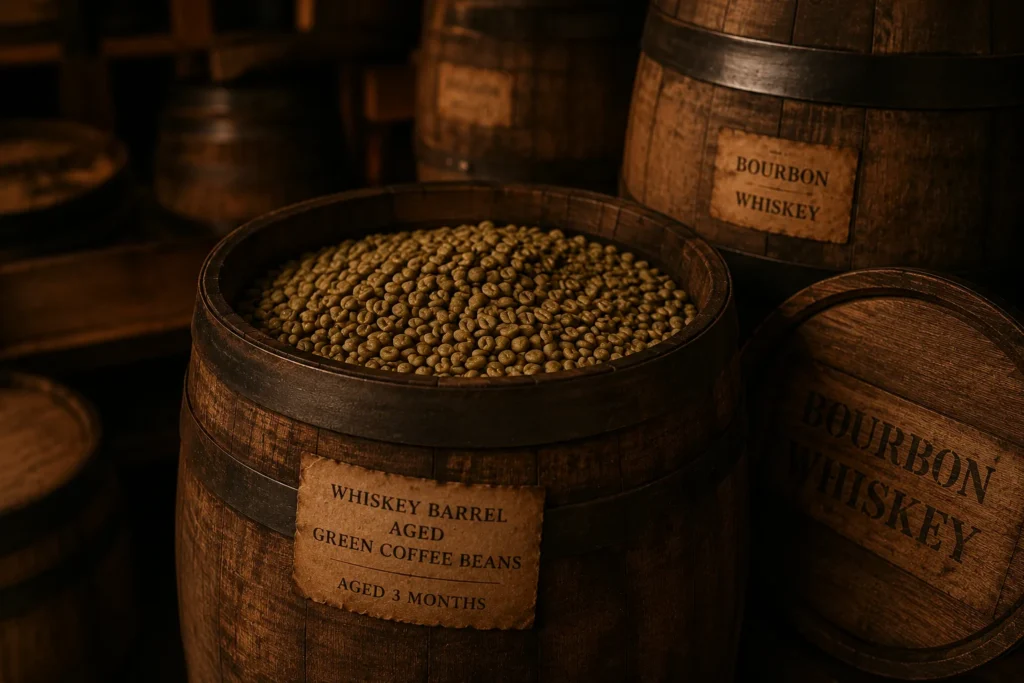
Key Takeaway: These aging practices are deliberate, controlled, and celebrated in specific styles—not random staling or neglect.
You can also read our article Top 10 best coffee beans in the world and learn more
Aging Green Coffee at Home: Should You Try It?
If you’re a home roasting enthusiast, you may wonder if you should experiment with aging green coffee.
Pros:
- Try rare flavor profiles (woody, spicy, mellowed acidity)
- Learn about flavor evolution and tradition
Cons:
- Hard to control humidity, temperature, and airflow at home
- Risk of mold or ruinous staling
- Most specialty coffee is optimized for freshness
Practical Home Tips:
- If you try aging green beans, store them in a cool, dry, dark place with stable humidity (ideally 60–65% RH)
- Check beans regularly for signs of mold or off-odors
- Start with 6–12 months, roast small samples along the way to compare
Aging Roasted Coffee: How Long Is Too Long?
For most coffee lovers, the focus is on roasted beans. Here’s what you need to know:
- Peak Window: Most specialty roasts peak 2–14 days after roasting.
- Beyond 3–4 Weeks: Noticeable flavor decline; higher risk of stale or flat taste.
- Freezing as a Hack: Storing roasted beans in airtight, moisture-free containers in the freezer can dramatically slow aging and preserve flavor for months.
Practical Tips:
- Always buy freshly roasted beans.
- Store in an airtight container away from light, heat, and moisture.
- If storing for weeks or months, freeze in small batches.
Lifestyle Connections: Who Loves Aged Coffee (and Why)?
Aged coffee isn’t for everyone. But some coffee drinkers swear by it:
- Espresso Lovers: Some Italian-style espresso blends use aged Sumatran or Monsooned beans for bold, earthy bases.
- Experimental Brewers: Adventurous home roasters and café pros may seek out aged lots for unique signature drinks.
- Coffee Collectors: Like wine collectors, some aficionados hunt rare micro-lots, including deliberate aged beans.
Myths & Marketing: Beware of “Aged” Claims
Not all aged coffee is created equal. With the growing interest, some brands may:
- Label old, stale, or mishandled beans as “aged” to justify higher prices.
- Use aging as a gimmick without the careful methods required for quality.
How to Tell Good from Bad:
- Ask about the aging process—duration, storage method, and tradition.
- Seek reputable roasters with a track record in specialty aging.
Flavor Notes of Aged Coffee: What to Expect
True aged coffees—when done right—can show:
- Woody, spicy, or tobacco-like aromas
- Mellow acidity
- Hints of dried fruit, leather, earth
- Fuller body and pronounced sweetness
But poorly stored aged coffees may taste:
- Flat or cardboard-like
- Musty or moldy
- Rancid or oily
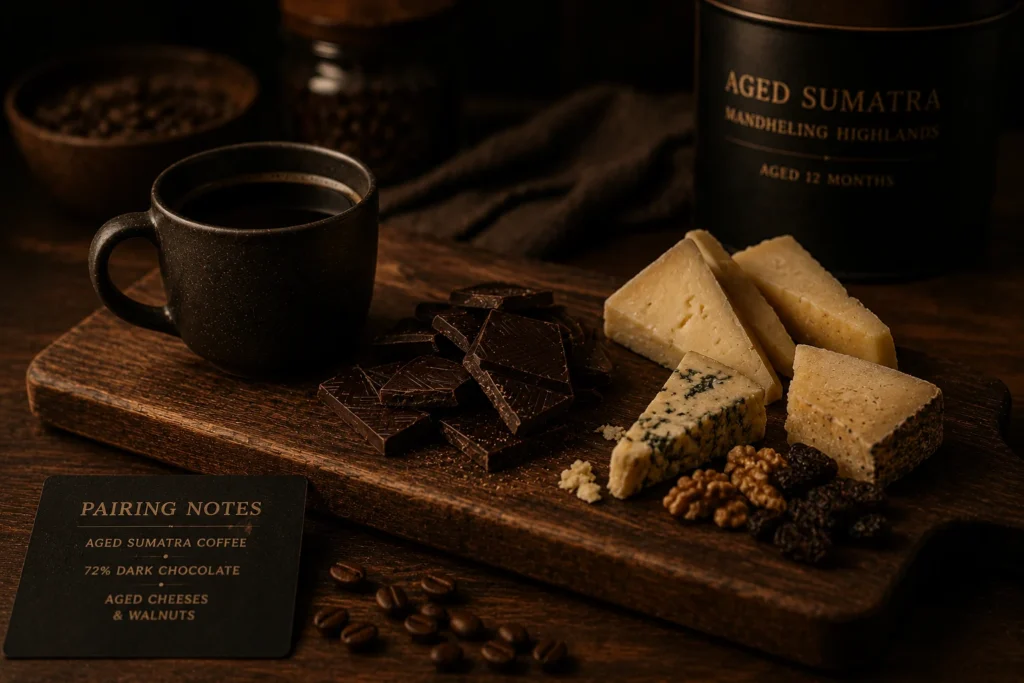
Pairing Aged Coffees with Food
Much like pairing wine, aged coffees complement robust or earthy foods:
- Dark chocolate and aged Sumatra
- Spicy dishes and Monsooned Malabar
- Aged cheese and barrel-aged coffee
Practical Tips for Enjoying or Avoiding Aged Coffee
If You Want to Try Aged Coffee:
- Seek out reputable specialty roasters.
- Look for classic aged styles (Sumatra, Malabar, barrel-aged).
- Brew using immersion methods (French press, AeroPress) to highlight body and depth.
If You Prefer Freshness:
- Buy in small batches.
- Check roast dates; aim for beans roasted within the past two weeks.
- Store properly and avoid exposure to air, moisture, or light.
FAQs: Can Coffee Beans Age Like Wine?
No for most coffees, especially after roasting. Only certain green beans, aged under strict conditions, develop prized flavors over time.
With proper storage (stable, cool, medium humidity, darkness), green coffee can last up to a year. Beyond that, quality usually drops unless intentionally aged.
Yes, if beans are simply old and not moldy or rancid. Flavor will be muted. If beans smell sour, musty, or show mold, discard them.
Absolutely. Freezing locks in freshness, preventing oxidation and staling for months if properly packed.
Conclusion: The Truth About Coffee Bean Aging
Coffee and wine both turn time into tradition, but they age very differently. While some green coffees are skilfully aged for unique flavors, most beans—especially roasted—are best enjoyed fresh. Still, seeking out aged coffee can be a delicious experiment for the adventurous palate.
Remember: Freshness is key for most coffee, but intentional aging has its own place in the world of specialty beans.
