
As an Amazon Associate I earn from qualifying purchases. This post contains affiliate links.
Coffee jelly sounds simple: coffee, a gelling agent, and time.
But once you look closer, it turns out to be a quiet traveler. This dessert crossed centuries, oceans, and cultures, changing texture, meaning, and even social status along the way.
I’ve made coffee jelly with light roasts, dark roasts, agar, gelatin, and too much curiosity. The result is always different. And that’s the point. Coffee jelly isn’t one recipe – it’s a global idea with local accents.
We’re Coffeeonix, and we’ll help you figure it all out!
What Is Coffee Jelly, Really?
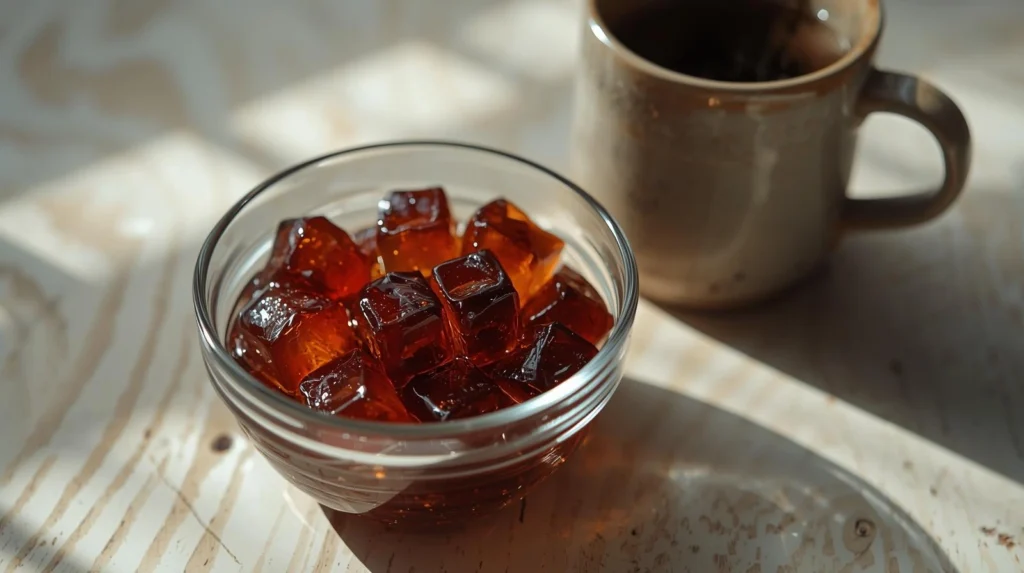
Coffee jelly is a chilled dessert made by setting brewed coffee with a gelling agent like gelatin or agar. It can be bitter or sweet, soft or firm, served alone or dressed with cream, milk, or syrup (Our 10 Best Sugar Free Coffee Syrups of 2026).
If short: it’s coffee that learned how to sit still.
What matters isn’t only how it’s made, but where. Different cultures treat coffee jelly differently – as a home dessert, café staple, nostalgic comfort food, or trendy novelty.
Typical base ingredients
- Brewed coffee (strength varies by region)
- Sweetener (or none at all)
- Gelatin or agar-agar
- Optional toppings: cream, condensed milk, ice cream

The Forgotten Beginning – Coffee Jelly in 19th-Century England
Most people associate coffee jelly with Japan. That’s only half the story.
The earliest recorded coffee jelly recipes appeared in England in the early 1800s. At the time, gelatin desserts were fashionable, technical, and a sign of culinary skill. Coffee jelly wasn’t cute. It was clever.
Early English Coffee Jelly
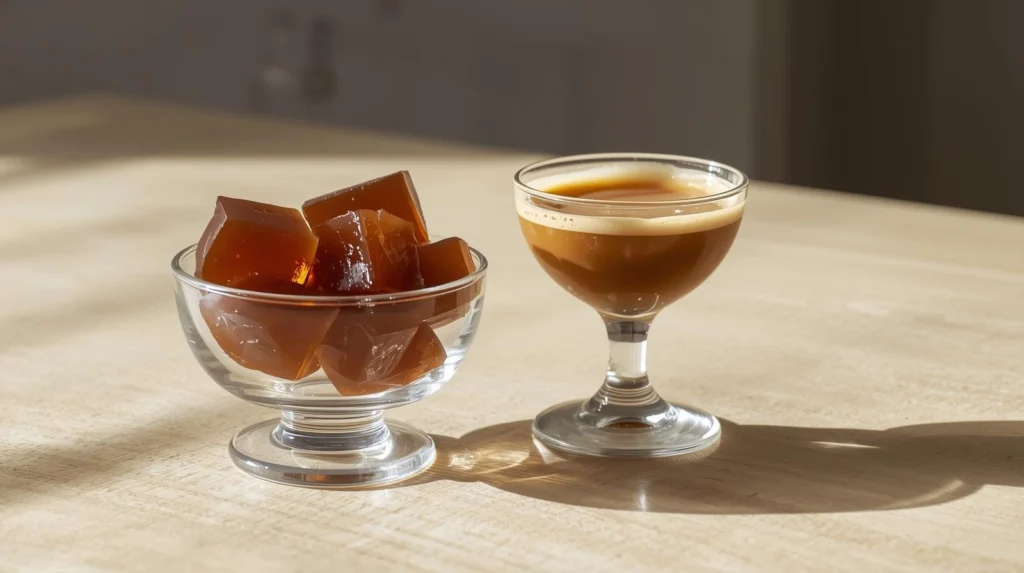
- Made with strong black coffee
- Thickened using animal-based gelatin
- Served cold, often unsweetened
- Considered refined, not playful
It was closer to a coffee experiment than a dessert. No whipped cream. No Instagram angles. Just texture and bitterness.
Over time, the trend faded in Europe. Coffee culture moved toward hot drinks, and gelatin desserts lost their prestige.
New England’s Quiet Obsession
While Europe moved on, New England didn’t.
In the late 19th and early 20th century, coffee jelly became a regional staple in parts of the northeastern United States. It showed up in diners, boarding houses, and family kitchens.
Why It Worked in New England
- Coffee was already part of daily life
- Gelatin was affordable and accessible
- Desserts were simple, practical, and not overly sweet
Coffee jelly here wasn’t exotic. It was familiar. Many locals remember it as a childhood dessert – plain, cold, slightly bitter, sometimes paired with cream.
Eventually, industrial desserts and changing tastes pushed it out of the mainstream. But it never fully disappeared.
Japan – Where Coffee Jelly Became a Classic
Japan didn’t invent coffee jelly.
Japan perfected it.
Coffee jelly arrived in Japan in the early 20th century and found a permanent home. Today, it’s everywhere: cafés, convenience stores, dessert menus.
Why Japan Embraced Coffee Jelly
- Love for clean textures and subtle bitterness
- Strong café culture
- Agar-agar instead of gelatin
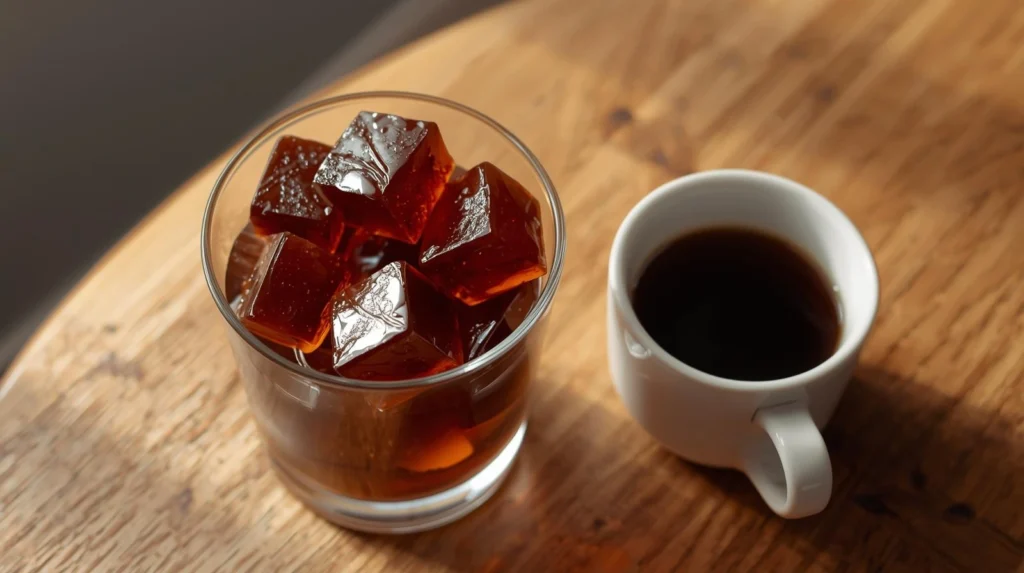
Agar, derived from seaweed, creates a firmer, cleaner bite. This completely changes the experience. Japanese coffee jelly is sharper, clearer, and more structured.
I’ve tested both versions side by side. Gelatin feels soft and round. Agar snaps. The coffee taste stays brighter.
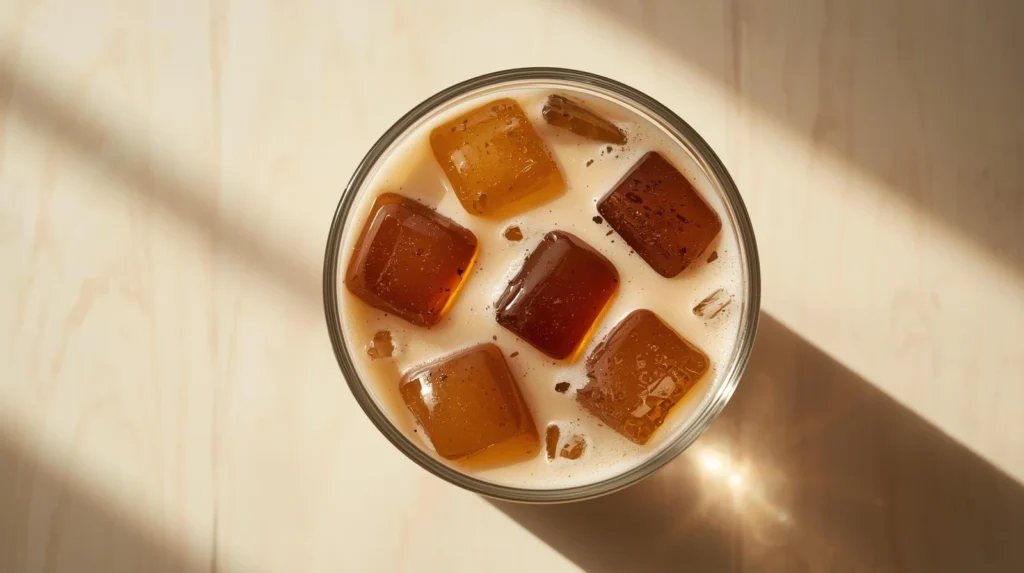
Coffee Jelly Around the World Today
Coffee jelly didn’t stop traveling.
Global Variations Table
| Region | Gelling Agent | Sweetness | Typical Serving |
|---|---|---|---|
| Japan | Agar | Low–Medium | With cream or milk |
| New England | Gelatin | Low | Plain or with cream |
| Philippines | Agar | High | With coconut milk |
| Southeast Asia | Agar | High | As drink-dessert |
| Europe (modern) | Gelatin | Medium | Gourmet desserts |
In the Philippines and parts of Southeast Asia, coffee jelly often becomes part of a drink – floating cubes in milk, sugar, and ice.
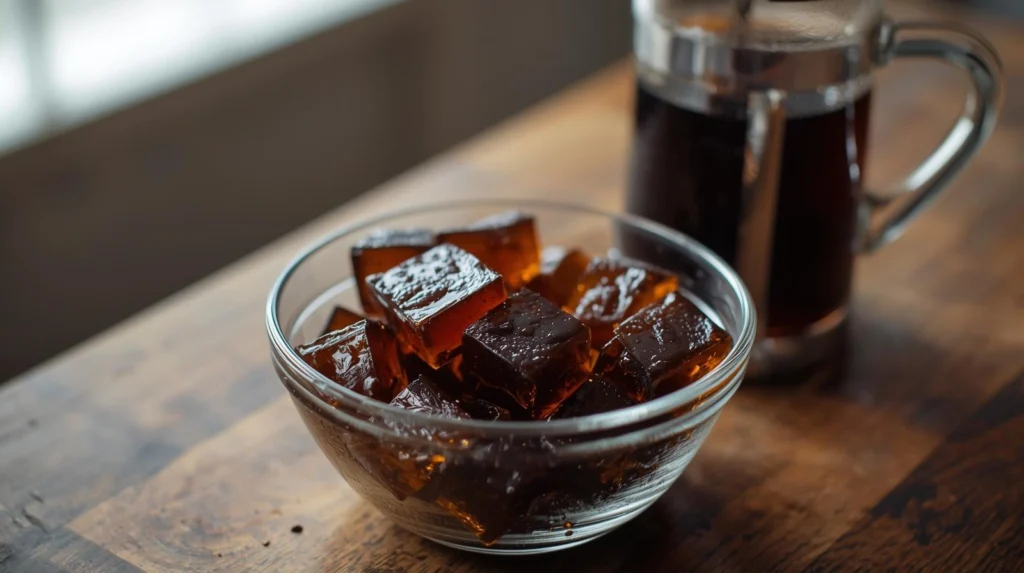
How to Make Coffee Jelly (And Make It Better)
Coffee jelly is forgiving, but details matter.
Coffee Choice
- Light roast → brighter, slightly acidic
- Dark roast → deeper, heavier mouthfeel
I prefer medium roast for balance. Too light gets sharp. Too dark loses clarity.
You can explore our “Beans and Roasting” category to get familiar with the different coffee roast profiles and options available.
Agar vs Gelatin
- Agar: vegan, firmer, cleaner cut
- Gelatin: softer, rounder texture
Basic Ratio
- Strong brewed coffee
- Sweeten lightly before gelling
- Chill fully – rushing ruins texture
FAQ – What People Actually Ask
Yes, if made with agar-agar.
Yes. The amount depends on coffee strength.
You can, but dilute it. Straight espresso makes the jelly harsh.
Not always. Traditional versions are lightly sweet or even bitter.
Why Coffee Jelly Still Matters
Coffee jelly survives because it sits between categories.
Not quite a drink. Not quite a dessert. Not trying to impress.
It’s coffee slowed down. Coffee given shape.
And in a world obsessed with speed, that alone makes it worth keeping.
