
As an Amazon Associate I earn from qualifying purchases. This post contains affiliate links.
Quick answer:
Higher storage temperatures speed up oxidation and moisture migration, dulling acidity, muting aromatics, and pushing coffee toward flat, stale, or bitter notes much faster than cool, stable conditions.
Now let’s break it down in more detail!
Coffee doesn’t suddenly go bad.
It slowly drifts away from its best version – day by day, degree by degree.
Storage temperature is one of the most underestimated factors in coffee flavor loss. Too warm, and aromas collapse faster than you expect. Too cold, and you risk moisture damage if storage is careless. I’ve stored the same coffee at different temperatures on purpose – light and dark roasts – and the difference isn’t subtle. You don’t need lab equipment to taste it.
This article explains what actually happens to coffee over time, how temperature accelerates or slows flavor decay, and how to store beans so they taste alive longer – not just “acceptable.”
Why Temperature Matters More Than You Think
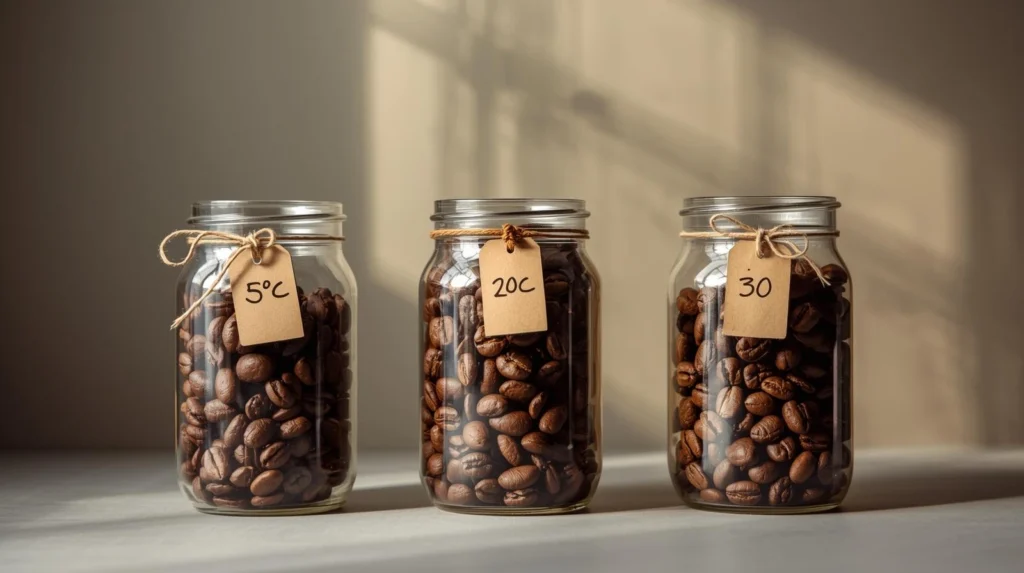
Coffee beans are chemically active. Even after roasting, they keep reacting with oxygen, moisture, and heat. Temperature controls the speed of these reactions.
Higher temperatures speed up oxidation. That means aromatic compounds – the ones responsible for sweetness, fruitiness, and floral notes – break down faster. Lower temperatures slow these reactions, preserving complexity for longer.
For example, studies on roasted coffee show that volatile compounds degrade significantly slower when beans are stored at cooler, stable temperatures compared to room temperature.
Oxidation: the silent flavor killer
You can read this full (slightly boring but informative) article – but I’ve pulled out the most interesting and useful parts for you right here.
Oxidation doesn’t make coffee “taste bad” immediately.
It makes it taste boring.
First, high notes disappear. Then sweetness fades. What remains is flat bitterness, woody tones, and a dry aftertaste. If your coffee suddenly tastes dull instead of expressive, oxidation is usually the reason – and temperature decides how fast it happens.
Storage Temperature vs Flavor: What Actually Changes
Let’s make this concrete.
Temperature comparison table
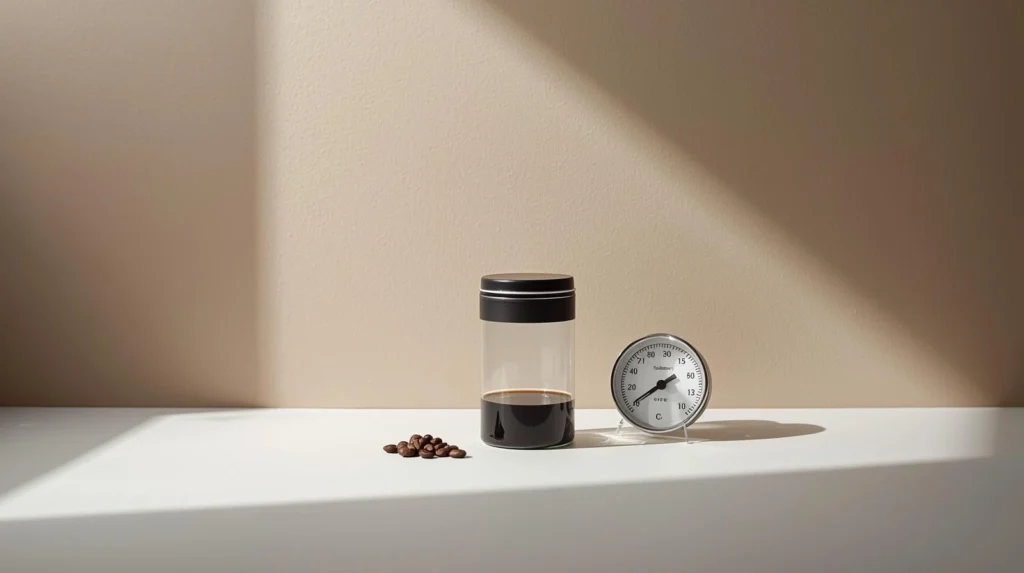
| Storage Temperature | Flavor Longevity | What You’ll Taste Over Time |
|---|---|---|
| 4–8°C | Longest | Sweetness and aroma last noticeably longer |
| 15–22°C | Medium | Balanced, gradual decline |
| 25–30°C+ | Short | Fast flattening, bitterness dominates |
When I stored a light roast at ~30°C (summer kitchen), citrus notes vanished in under two weeks. The same coffee at ~18°C kept its brightness for nearly a month. Same beans. Same roast. Only temperature changed.
The Problem With “Just Store It in a Cool Place”
Most guides stop here. That’s the mistake.
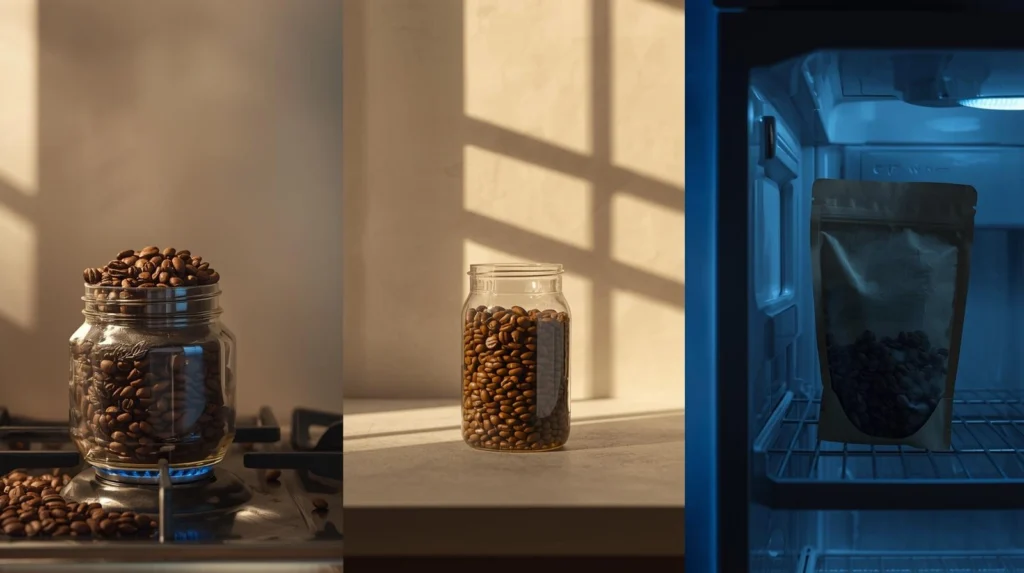
“Cool” without context can mean a fridge, a cold window, or a fluctuating pantry. Temperature swings are worse than a stable, slightly warmer environment.
Cold storage only works when:
- the container is truly airtight
- moisture cannot condense inside
- temperature stays stable
Otherwise, you’re trading oxidation for moisture damage and odor absorption.
How Different Roast Levels React to Temperature
Light roasts are fragile.
Dark roasts are stubborn – but not immune.
- Light roast: high volatility, delicate aromatics → suffer fast at warm temperatures
- Medium roast: balanced, moderate resistance
- Dark roast: fewer high aromatics, but surface oils oxidize quickly
I’ve noticed light roasts lose character fastest when stored warm. Dark roasts don’t collapse as quickly, but they become harsh and ashy instead.
Best Storage Temperatures (Practical Guide)
Short version:
- Daily use: 15–20°C, dark airtight container
- Long-term storage: 4–8°C, airtight, minimal opening
- Avoid: heat, light, humidity, frequent temperature changes
Grinding right before brewing matters more than almost anything else. Ground coffee exposes massive surface area to oxygen. Temperature just accelerates the damage.
FAQ: Storage Temperature and Coffee Flavor
Yes – but only with airtight containers and stable temperature. Otherwise, it hurts more than it helps.
Usually 3–5 weeks before noticeable flavor loss, depending on roast and packaging.
Freezing can preserve coffee well if done in small, sealed portions. Repeated thawing ruins it.
