
As an Amazon Associate I earn from qualifying purchases. This post contains affiliate links.
Water is the invisible ingredient that defines everything – the flavor of your coffee, the lifespan of your espresso machine, the crema, the consistency, even the number of times you’ll swear while descaling your machine.
I’ve tested filtered water, bottled mineral water, reverse osmosis (RO) with mineral packs, and even tap water in different cities. After dozens of brews, one thing became painfully clear: coffee tastes good when water is balanced, and your machine survives only when the water is soft enough. Water quality decides!
Why Water Quality Matters
Before you worry about beans, tamping pressure, or the grind setting, your water is already influencing 40–50% of your final cup. Coffee is 98% water, yet most people treat it like a background character.
Here’s how it really works:
- Hard water → more scale → clogged pipes → unstable temperature → bitter or dull taste.
- Overly soft or distilled water → flat, sour, thin coffee with poor extraction.
- Balanced water → clear flavor, sweetness, smooth acidity, and a long-lasting machine.
Coffee Water Explained Simply
Water for coffee is usually defined by four measurements. They sound technical, but in reality, they’re easy to understand once someone explains them in human language.
1. Hardness (GH) – minerals that create scale
This is how much calcium and magnesium your water contains.
More minerals → more scale inside boilers and pipes.
Ideal range for espresso: 50–70 ppm.
Above 100 ppm, machines begin to suffer.
2. Alkalinity (KH) – the buffer that shapes acidity
Alkalinity balances coffee’s natural acids.
Low alkalinity → sharp, sour extraction.
High alkalinity → muddy, bitter cup.
3. TDS (Total Dissolved Solids)
This is the “total mineral content” of your water.
SCA recommends: 75–250 ppm
Best flavor often appears around: 120–150 ppm
4. pH Level
Neutral is best: 6.5–7.5
What Water Should You Use for Your Coffee Machine?
I’ve brewed with everything – Brita filters, BWT Magnesium, Aqua Carpatica, RO with minerals, and even “random cheap bottled water.” The truth is: there’s no universal type, but there is a universal goal – soft, but not empty water.
Here’s the real, practical overview.
Ranking Water Types for Espresso
| Water Type | Flavor Quality | Machine Safety | Notes |
|---|---|---|---|
| Filtered water (Brita/BWT) | ★★★★ | ★★★★ | Best daily option |
| Low-mineral bottled water | ★★★ | ★★★ | Look for 50–100 ppm |
| RO water + mineral packets (Third Wave Water) | ★★★★★ | ★★★★★ | Consistent and ideal |
| Tap water | ★ | ★ | Only safe in soft-water regions |
| Distilled water | ★ | ★★★★★ | Bad taste, risky for pumps |
Approved by SCA Water Standards

What I Use With Different Machines (Real Experience)
I’ve owned multiple machines over the years, and water choice genuinely changes not only the taste but also the maintenance. If you want to dive deeper into brewing setups, our coffee guides explore equipment, techniques, and optimization.
Breville Barista Express / Pro
Breville boilers hate scale. Use:
- Brita-filtered water
- OR RO water + mineral kit
Safe GH: below 70 ppm.
DeLonghi Machines
They tolerate minerals slightly better, but still require soft water.
Best choice: BWT Magnesium filter.
Jura Machines
If you use their Claris Smart filters, they manage hardness for you.
Use: filtered tap water (not mineral water).
How Water Changes the Actual Taste of Coffee
I’ve tested Ethiopian light roasts, Brazilian medium roasts, washed and natural coffees – and the change in flavor with different water types is dramatic.
Here’s the pattern I kept seeing:
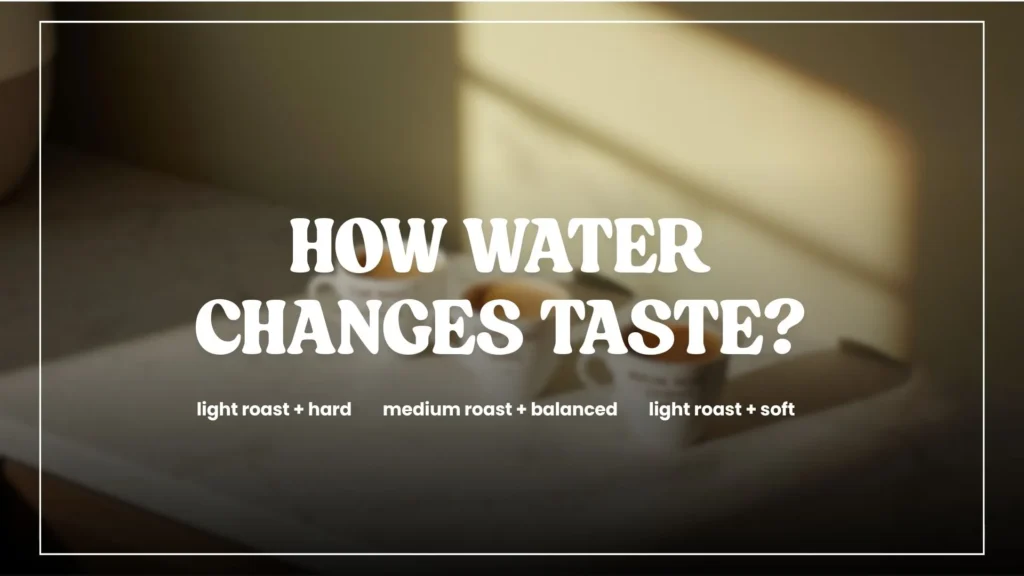
Light Roast + Soft Water
Bright, citrusy, extremely clean – sometimes too sharp.
Light Roast + Hard Water
Less acidity, more body; sweeter but less transparent.
Medium Roast + Balanced Water
The “sweet spot”: full body + clarity.
Tip:
If your coffee tastes sour → increase alkalinity.
If it tastes bitter → reduce hardness.
How to Test Your Water at Home (Easy Mode)
You don’t need a lab. Just two tools:
- TDS meter (cheap, $10–$15)
- GH/KH test strips
Steps:
- Measure your water’s TDS.
- Check hardness with strips.
- Adjust with filters or mineral packets.

How to Protect Your Machine from Scale
Scaling is the number one cause of espresso machine failure.
But preventing it is surprisingly simple.
1. Use filtered or lightly mineralized water
Your machine should never see raw hard tap water.
2. Descale only when the manufacturer recommends
Some brands (like Jura) warn against unnecessary descaling.
Check your local water hardness
FAQ
Yes – if it has 50–100 ppm TDS and low hardness.
Pure RO can. But RO + minerals is ideal.
No. It leads to poor extraction and can cause pump issues because it lacks minerals.
Alkaline water isn’t ideal. High alkalinity flattens acidity, muddies the flavor, and can make espresso taste dull or even bitter. Coffee needs a balance – not “health-drink” water.
For best results, choose water with alkalinity around 40–50 ppm, not the 100+ ppm often found in commercial alkaline brands.
Yes – but in a different way.
Water quality controls what gets extracted.
Water temperature controls how fast it gets extracted.
If the temperature is too low → sour, under-extracted espresso.
If it’s too high → harsh, over-extracted bitterness.
Most espresso machines aim for 92–96°C (197–205°F), which works perfectly only when the water chemistry is balanced.
Final Thoughts
If your water tastes clean and sits in the “medium” mineral zone, you’ll get sweeter espresso, more consistent extraction, and a machine that lasts years longer.
Balanced water protects everything: the flavor, the equipment, and your nerves 🙂
